 Studios | Sundays 10PM ET


By Cole Cusumano
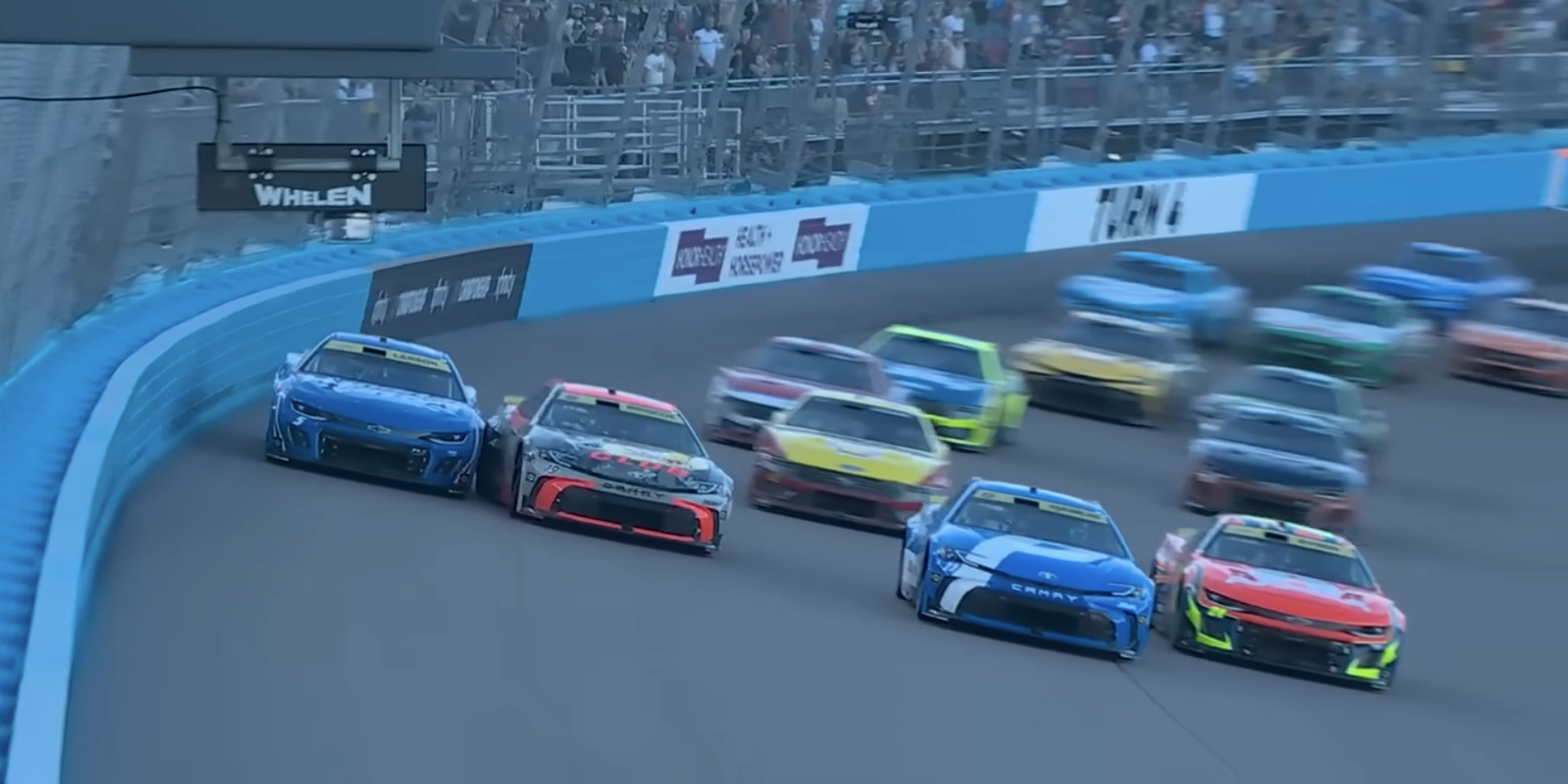
Call me whatever you want, I feel Phoenix Raceway has proven to be a better NASCAR Cup Series Championship Race than Homestead-Miami Speedway. I’m fully aware I’m in the vast minority with that opinion (we’re allowed to have those, right?), but it’s important to take that statement quite literally, while also knowing all the details behind my logic.
Let me be clear: I fully acknowledge and agree with the masses that Homestead, objectively, produces better watchability compared to Phoenix and has consistently put on some of the best races on the schedule since the introduction of the Gen-7 car in 2022 (and beyond, for that matter).
Not to mention – like most everyone else – I associate Homestead with the finale. NASCAR’s return to the site of the championship for 19 years, coupled with the revival of “The Chase,” just felt right. I’m also a believer that 1.5-mile tracks best represent the brand and identity of the sport.
Nor am I oblivious to the fact essentially every driver, fan, industry worker, etc. wanted the finale to return to Homestead. Hell, I was hyped up when its return was announced and I’m glad it’s back!
I didn’t say Phoenix was a better site for the finale than Homestead. I said it was a better “NASCAR Cup Series Championship Race.”
As a journalist, I feel I watch races differently from most fans. In terms of competition as it relates to motorsport, Phoenix is the total package that merits true championship pedigree in order to master. Does that always make for the most visually compelling product? No! But I appreciate when unrelenting adversity and attrition must be overcome in order for victory to be earned.
Short track by definition, the one-mile tri-oval that races like an intermediate is widely regarded throughout the garage as one of the most challenging on the circuit for many reasons.
For starters, the car is incredibly difficult for teams to dial in with each corner of the track being so different. Drivers also have to carefully manage tire degradation, taking into account the changing surface conditions. This 312-mile sprint is also so dependent on the strategy wars raging atop the pit boxes from the crew chiefs and often comes down to execution in the trenches on pit road.
While cars ripping the fence at Homestead is an epic visual aesthetic, the race itself doesn’t possess all of the aforementioned qualities. Phoenix accentuates these themes true to the competition aspect of motorsport, requiring top-to-bottom execution and rewarding the most deserving team.
To be fair, Homestead exhibited comparable strategic value as the finale prior to stage racing. Although tire degradation has rarely played a factor throughout the years at the 1.5-mile track, there was at least the element of fuel saving – another thing NASCAR is lacking as a whole since 2017. But that’s a different conversation.
Since everyone wants to talk about the lack of parity at Phoenix compared to Homestead, let’s talk facts. Sampling includes Homestead in five Gen-7 era starts and the four Phoenix finales with the same car.
Homestead has Phoenix bested in average lead changes and green flag passes with 22.8 and 4,079.2, respectively, to the short track’s 15.3 and 2,439.8, respectively. However, after changes to the package this season, Phoenix set Gen-7 records for both metrics with 23 lead changes and 3,641 green flag passes in the spring and fall, respectively, averaging 3,376.5 green flag passes in 2026. It’s also worth noting, the 18 lead changes in the 2026 finale were the second-least in the Next-Gen era at the 1.5-mile track.
In terms of parity between winners, there were three different winners in four finales at Phoenix (75%), versus four different winners in five Next Gen starts at Homestead (80%). There have also been seven different winners in 10 Next Gen starts at Phoenix.
How about margin-of-victory? Ryan Blaney won the last two finales, this year at Homestead by 0.314-second and Phoenix in 2025 by 0.097-second. At Homestead, three-of-five finishes were determined by more than 1-second, with the average being 0.934-second. Three-of-four Phoenix finales were won by 0.301-second or less, averaging about half of Miami’s margin-of-victory at 0.489-second.
At the end of the day, it’s subjective. You’re getting a better overall visual appeal with Homestead, but by the numbers, the two tracks are more comparable than most think.
In my opinion, Phoenix is the superior “Championship Race” regarding competition in motorsport and rewarding the most deserving “team,” but Homestead feels like the finale, and I have no opposition to NASCAR’s decision to go back there. After all, they did emphasize going back to their roots, which I fully endorse.
One thing I don’t particularly agree on is the promise of a rotating finale, but I understand why this will be implemented in the near future. Personally, I believe the only rotation should be between Phoenix and Homestead as the championship and penultimate race.
You want to go back to your roots? Homestead was the finale for 19 years and Phoenix was the penultimate for 15 years. It only makes sense to revert back to a rotating version of this, especially given the history, prestige and product between both venues, who’ve both proven their worth in hosting NASCAR Championship Weekend.
My opinion has nothing to do with residing in Arizona. I also purposely didn’t mention Phoenix’s appeal as a facility, as finances prevented me from traveling to Homestead for the finale and it wouldn’t be fair for me to compare the two.
Again, I’m not debating the finale should be in Phoenix over Homestead. This strictly comes down to the competitive spirit of motorsport between the two, and which is the better “Championship Race.”